When Jeff Benn, RPN graduated from Northern College in Timmins in 2018, he didn’t lock himself into one path. Instead, he took temporary roles across surgical post-op, the emergency department, and medicine, including COVID medicine. It was a deliberate strategy.
“I’m not afraid to take temporary roles,” says Benn, who is now working as a Policy and Procedure Specialist at Hamilton Health Sciences. “Healthcare is so broad and you never know which avenues are going to be available to you. When you take temporary roles, you can go into different specialties. If it’s not for me, my contract is over and I move on to the next position. This approach has helped me find the things that spark joy, piques my interest, and where my passions are.”
What Benn discovered was that his passion extended beyond bedside care. “As much as I love the bedside and taking care of patients…the way I like to advocate for real changes is going into positions that are not bedside.”
That realization led him into nursing informatics which is a specialty he describes as “game-changing” and underrecognized. When his organization began optimizing its electronic health record, Benn moved from a credential trainer role into an analyst position, configuring the system to shape how care is delivered.
“Your electronic health record really shapes the way you deliver care,” he explains. “You can have pop-ups that say, ‘This patient has a history of diabetes but hasn’t had their hemoglobin A1C checked in a while. Maybe we should get that ordered.’ It’s about incorporating changes into the electronic health record while keeping it as just a tool that can spark reminders of best practice without making clinicians reliant on it. We still need critical judgment and the human factor of healthcare.”

Benn went on to become a founding co-lead of the Innovations and Digital Collaborative, part of the Nursing Quality Council at Hamilton Health Sciences. The collaborative brought together nurses from different specialties to evaluate frontline ideas, deciding what to move forward and what wouldn’t work in practice.
Now in his policy role, Benn reviews authorizing mechanisms for the organization, including medical directives and Delegation of Care Act. He sees these tools as powerful levers for timely, quality care.
“If you have an oncology patient presenting with fever and chills, you know they’re immunosuppressed and likely need blood cultures. With a medical directive, you don’t need to wait for a physician to order them—you’re already authorized. The patient gets care that much sooner,” he says. “It’s an incredible tool that is very underutilized.”
When asked about technology in nursing, Benn is careful to broaden the conversation beyond artificial intelligence.
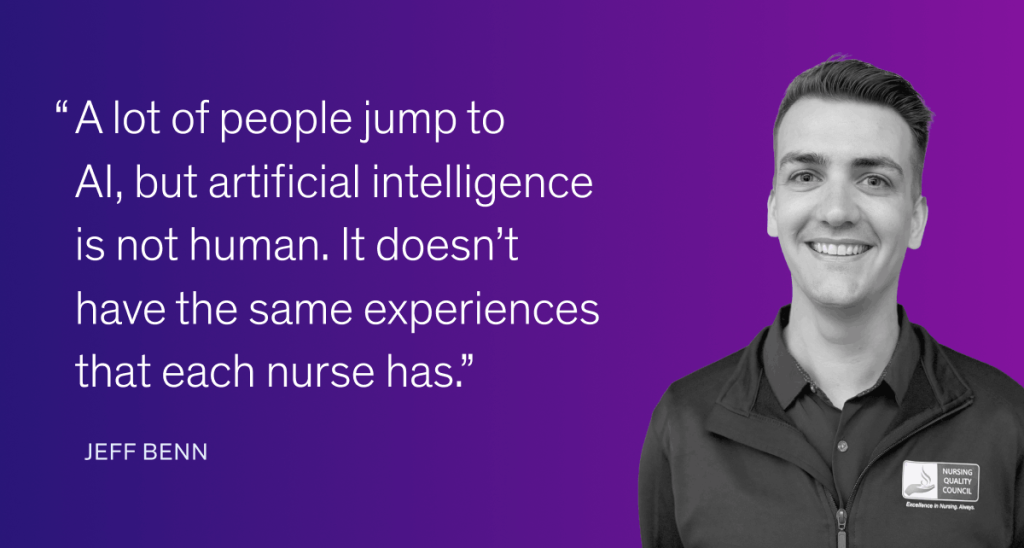
“A lot of people jump to AI, but artificial intelligence is not human. It doesn’t have the same experiences that each nurse has,” he says. “It’s a tool to support nurses to provide care.”
He points to innovations already making a difference at the bedside. There is the MIMOSA (Multispectral Mobile tissue Assessment device) scanner, which helps detect early pressure injuries in patients with darker skin tones—injuries that might otherwise go unnoticed until they become serious. There are also hospital beds with air mattresses that shift a patient’s weight, reducing the need for manual repositioning every two hours. And there are IV infusion pumps that connect directly to the electronic health record, streamlining documentation and improving accuracy.
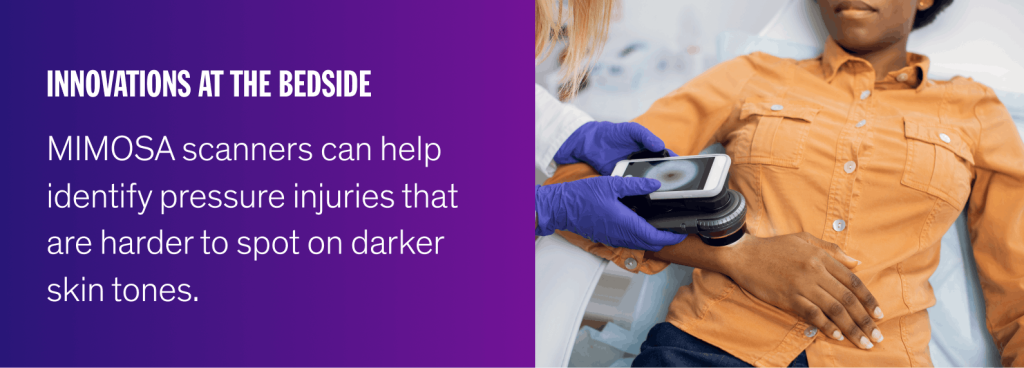
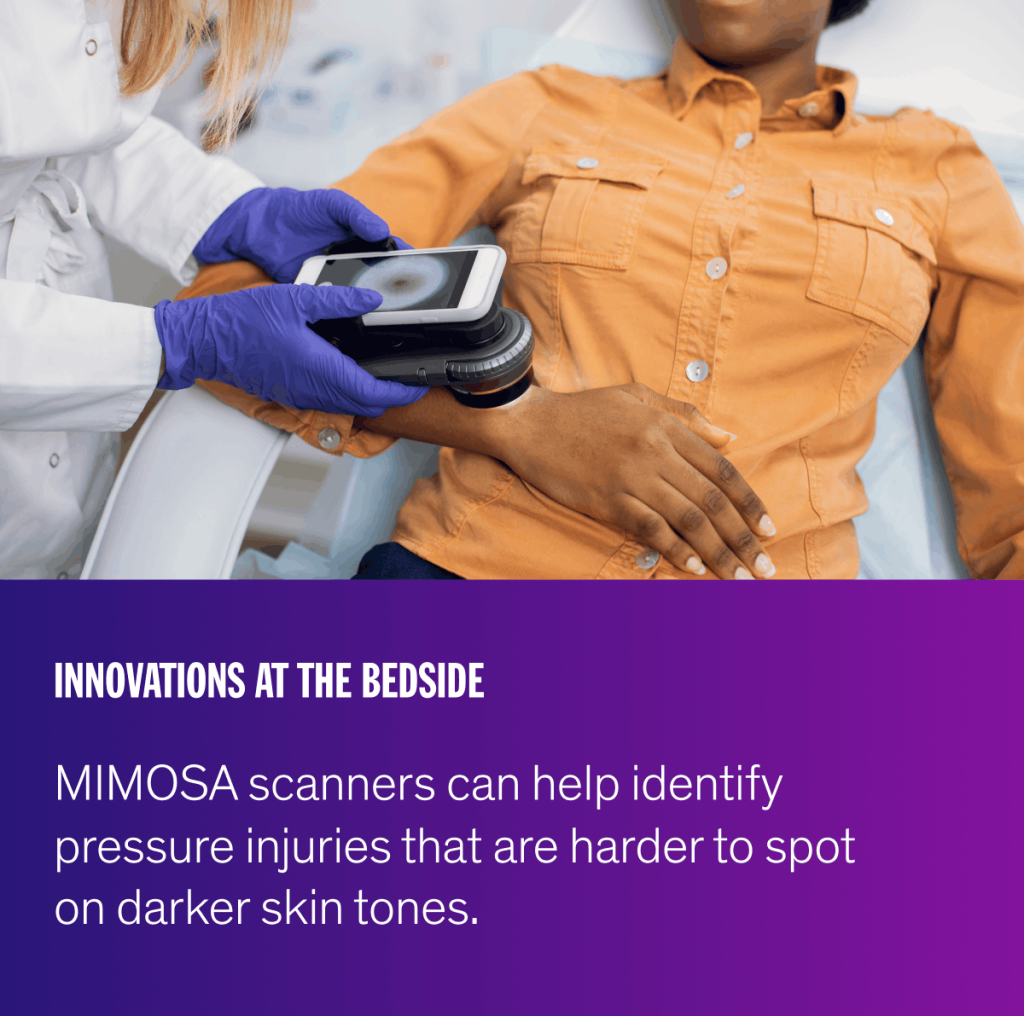
“You prevent the pressure injury that much sooner, so the nurse doesn’t need to spend all that time doing wound care,” Benn says. “It makes such a difference.”
His throughline is clear: innovation doesn’t have to mean a massive system overhaul. Sometimes it is a smarter bed, a better scanner, or a policy that puts the right tool in the right clinician’s hands. And for RPNs, Benn sees a huge opportunity.
Benn feels the opportunity ahead for RPNs is tremendous. As new tools continue to enter practice, RPNs are positioned to be the ones who bridge technology and compassionate care—not because they become tech experts first, but because they are already experts in being present with patients. “We need to make sure RPNs are at the table when these decisions are being made,” Benn says. “We’re the ones at the bedside. We know what works and what doesn’t.” Investing in training that builds confidence with these tools means RPNs can spend less time fighting clunky systems and more time doing what they were trained to do.
“The future of practical nursing is not about choosing between technology and patient care. It is about giving RPNs the support they need to use both well, so the human side of healthcare is not lost in the process.”